

Learning a second language as an adult is like trying to assemble furniture without instructions. It is possible, yet often frustrating. Children, however, absorb language like a sponge in water.
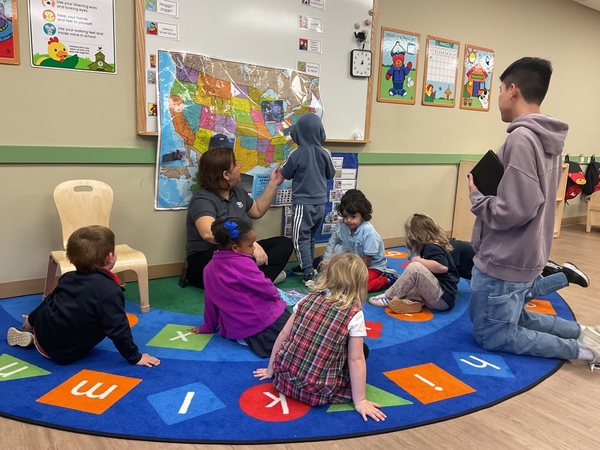
This is what is driving the Spanish immersion program among preschool and kindergarten children in Walnut Creek to gain massive momentum among the community spanish immersion school colorado
.
And this is where most parents remain in the dark until it is often too late: the golden age for language acquisition is between 2-7 years old. During these years, the brain is literally hardwired differently. Sound, rhythms, and grammatical patterns are absorbed naturally, without the self-consciousness adults experience.
Walnut Creek is uniquely positioned in a cultural corridor. With a large Spanish-speaking population in the Bay Area and California overall, raising bilingual children is more than education—it’s a social and economic advantage.
A Spanish preschool program is far more than flashcards and counting to diez. The most effective programs integrate language into daily life. Daily routines like eating, playing, and singing all reinforce learning. Kids repeat songs naturally without knowing they’re learning grammar.
At the kindergarten level, progress increases rapidly. After one or two years of immersion, children stop translating in their heads. They process thoughts in Spanish—another way of thinking.
A common question is: “Could this confuse my kid?” The short answer is no. Decades of research show that bilingual children gain enhanced mental flexibility, are stronger problem solvers, and become strong readers in their primary language.
A mother in Walnut Creek once said: “By Thanksgiving, my daughter was correcting my pronunciation. I was humiliated and proud.”
Beyond academics, there are social advantages. They gain an intrinsic interest in cultural differences. They explore why cultures differ. That interest stays with them for life.
There are several types of programs available. Some offer full-day immersion with only Spanish spoken. Others follow a 50/50 dual-language approach, helpful for parents who aren’t fluent. There is no single “right” approach—it comes down to your child’s needs and preferences.
Financial factors do come up. These programs are not typically low-cost. Many consider it worth the cost. College language requirements? Already covered. Professional benefits? Without question.